Read our damp and mould report focusing on Awaab's Law

Q2 Quarterly Data 2025-26

In this quarter, from July to September 2025, we made 2,270 determinations.

Complaints received

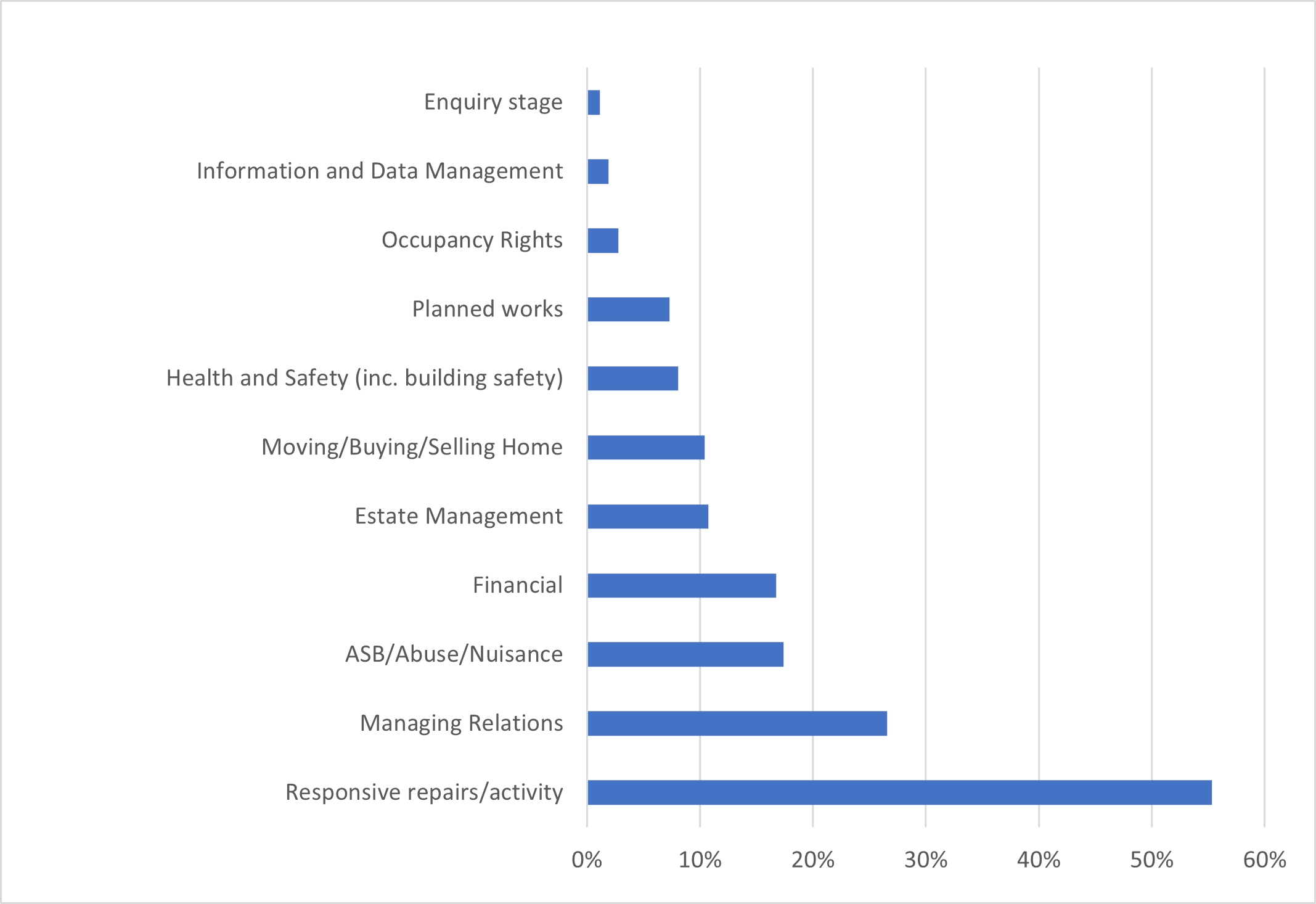
The complaint categories graph shows that 'responsive repairs/activity' was once again the most complained about category, with 55% of all complaints. That compares to the second highest 'managing relations', at 27%.

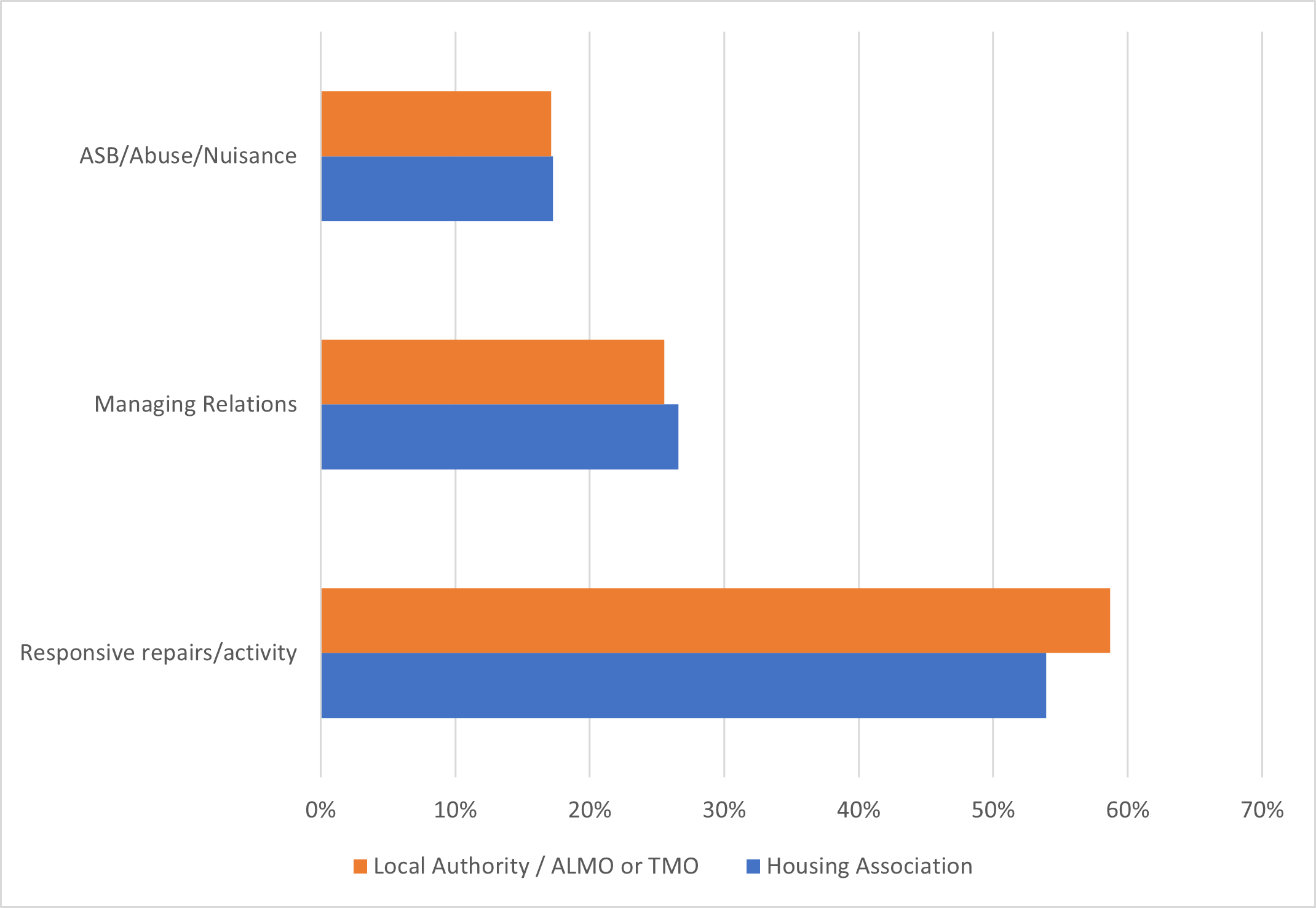
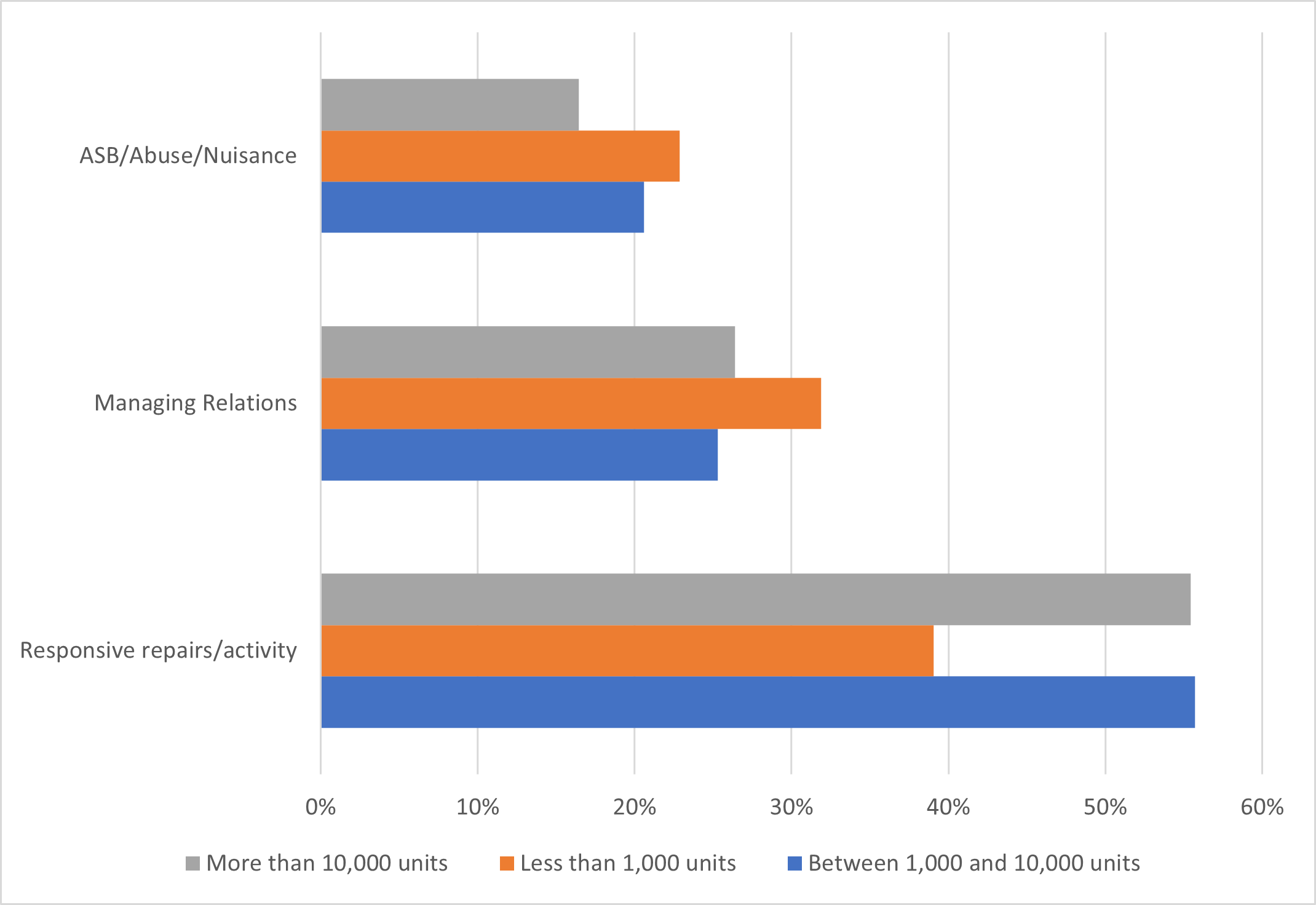
The following 2 graphs show how many complaints we receive from different types of landlords and different sizes regarding the top 3 complaint categories (responsive repairs/activity, managing relations, and ASB / abuse / nuisance).

From April 2025, we have updated the terminology of some of our complaint categories.

Property condition is now referred to as 'responsive repairs/activity'.

Complaint handling is now referred to as 'managing relations'.

Complaint categoriesResponsive repairs/activity 55%, Managing Relations 27%, ASB/Abuse/Nuisance 17%, Financial 17%, Estate Management 11%, Moving/Buying/Selling Home 10%, Health and Safety (inc. building safety) 8%, Planned works 7%, Occupancy Rights 3%, Information and Data Management 2%, Enquiry stage 1%.

Type of landlordResponsive repairs/activity - Housing Association 54% Local Authority / ALMO or TMO 59% Managing Relations - Housing Association 27% , Local Authority / ALMO or TMO 26% ASB/Abuse/Nuisance - Housing Association 17%, Local Authority / ALMO or TMO 17%

Size of landlordHousing Association: Responsive repairs/activity 54%, Managing Relations 27%, ASB/Abuse/Nuisance 17%. Local Authority / ALMO or TMO: Responsive repairs/activity 59%, Managing Relations 26%, ASB/Abuse/Nuisance 17%.

Determinations

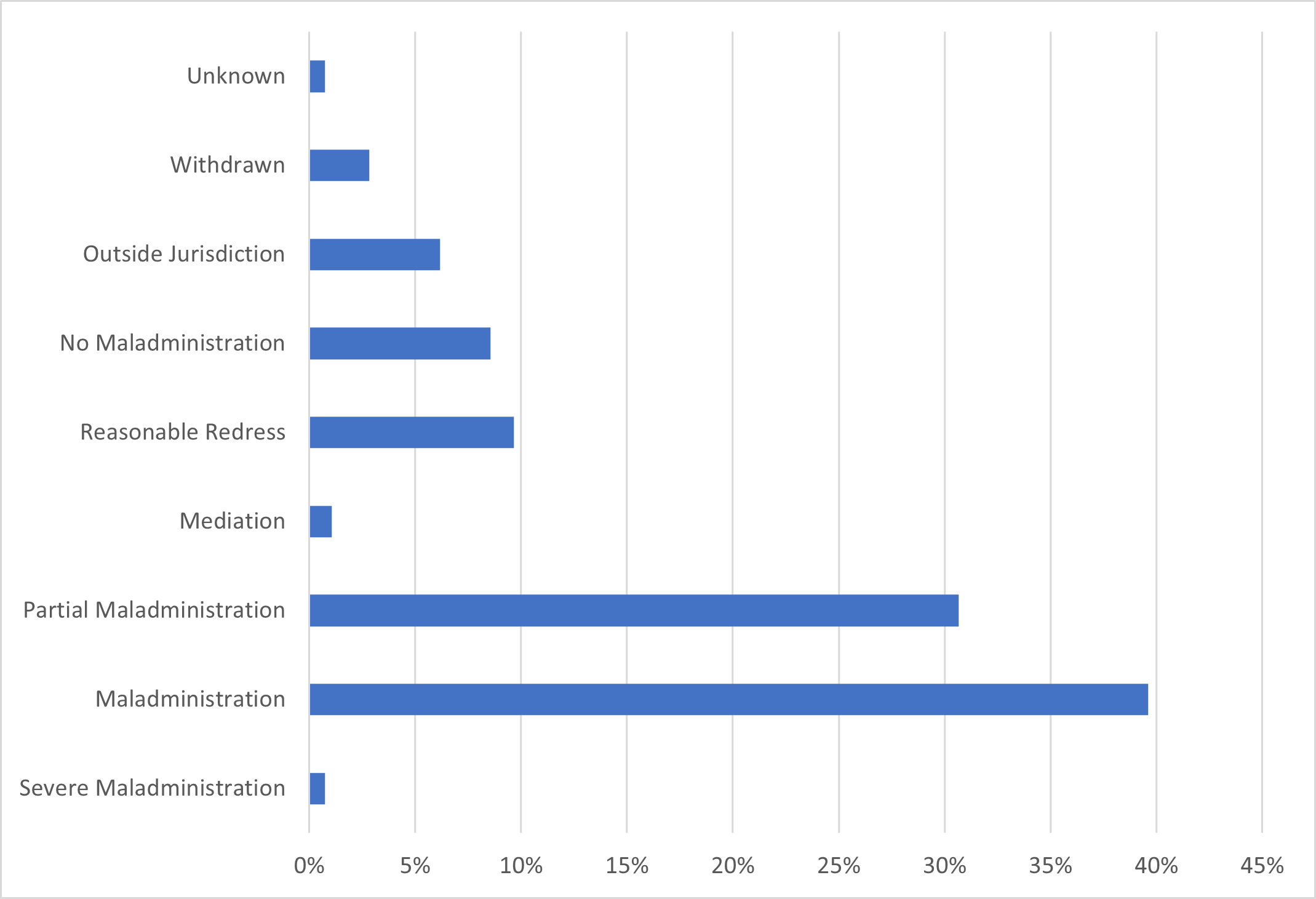
This graph shows how we found maladministration (whether that be severe, partial, or maladministration) in 72% of cases in the quarter.

% of determinationsSevere Maladministration 1% Maladministration 40% Partial Maladministration 31% Mediation 1% Reasonable Redress 10% No Maladministration 9% Outside Jurisdiction 6% Withdrawn 3% Unknown 1%
Category findings

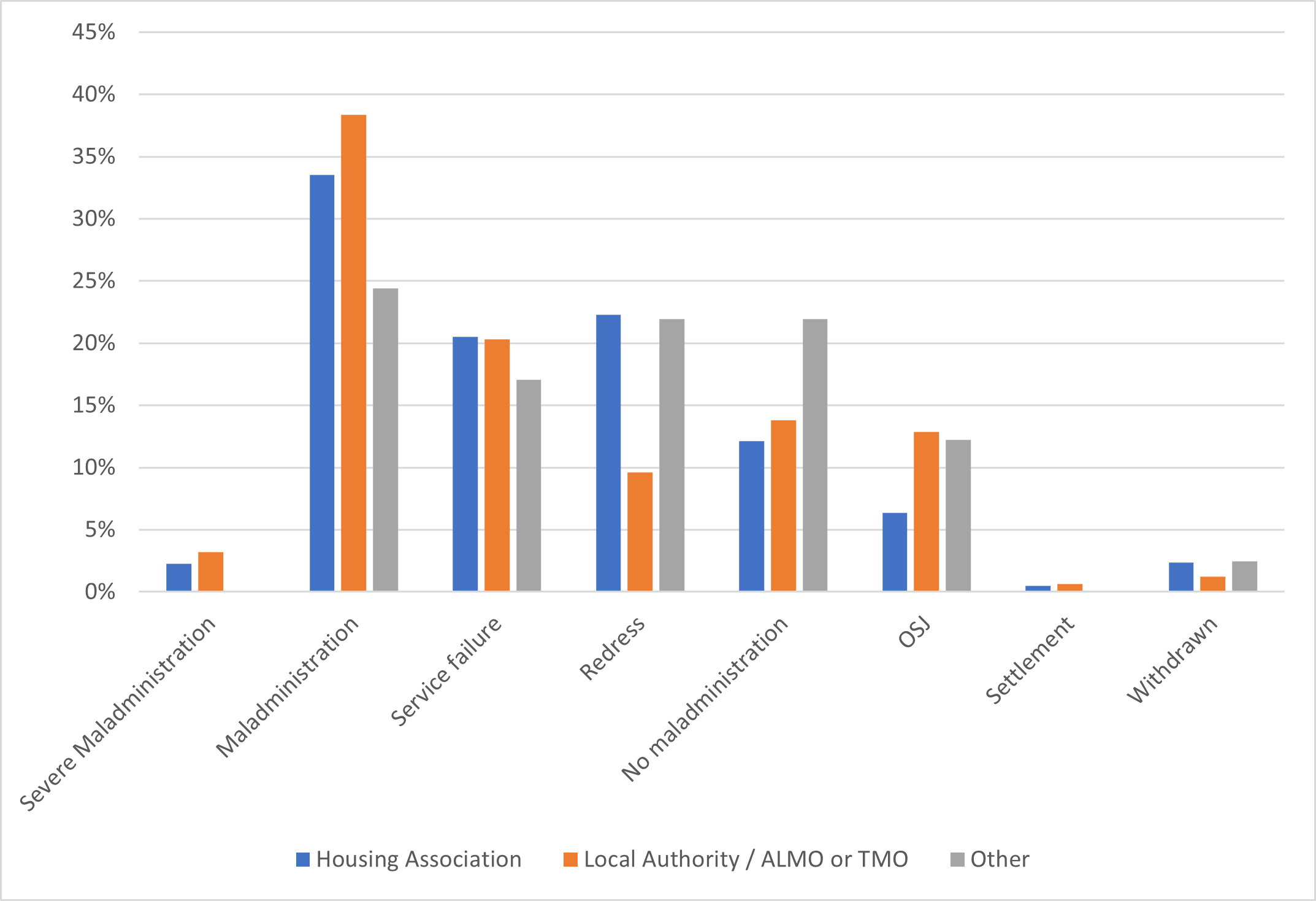
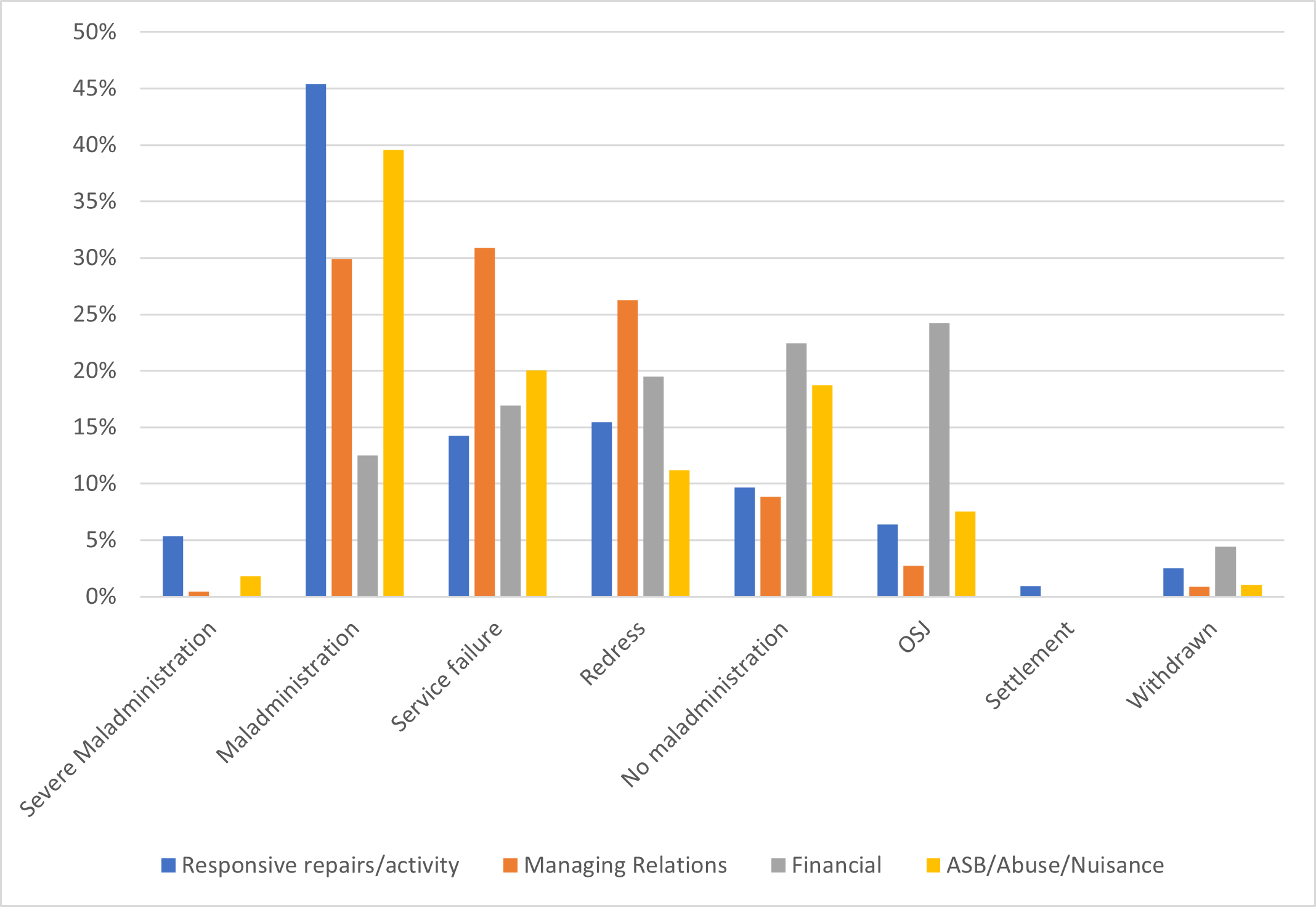
These graphs show how the different category findings relate to the top 4 complaint categories, the different types of landlords, and the different size of landlords.

Different category findingsSevere Maladministration: Responsive repairs/activity 5%, Managing Relations 0%, Financial 0%, ASB/Abuse/Nuisance 2%. Maladministration: Responsive repairs/activity 45%, Managing Relations 30%, Financial 13%, ASB/Abuse/Nuisance 40%. Service failure: Responsive repairs/activity 14%, Managing Relations 31%, Financial 17%, ASB/Abuse/Nuisance 20%. Redress: Responsive repairs/activity 15%, Managing Relations 26%, Financial 19%, ASB/Abuse/Nuisance 11%. No maladministration: Responsive repairs/activity 10%, Managing Relations 9%, Financial 22%, ASB/Abuse/Nuisance 19%. OSJ: Responsive repairs/activity 6%, Managing Relations 3%, Financial 24%, ASB/Abuse/Nuisance 8%. Settlement: Responsive repairs/activity 1%, Managing Relations 0%, Financial 0%, ASB/Abuse/Nuisance 0%. Withdrawn: Responsive repairs/activity 3%, Managing Relations 1%, Financial 4%, ASB/Abuse/Nuisance 1%.
Type of landlordSevere Maladministration: Housing Association 2%, Local Authority / ALMO or TMO 3%, Other 0%. Maladministration: Housing Association 34%, Local Authority / ALMO or TMO 38%, Other 24%. Service failure: Housing Association 21%, Local Authority / ALMO or TMO 20%, Other 17%. Redress: Housing Association 22%, Local Authority / ALMO or TMO 10%, Other 22%. No maladministration: Housing Association 12%, Local Authority / ALMO or TMO 14%, Other 22%. OSJ: Housing Association 6%, Local Authority / ALMO or TMO 13%, Other 12%. Settlement: Housing Association 1%, Local Authority / ALMO or TMO 1%, Other 0%. Withdrawn: Housing Association 2%, Local Authority / ALMO or TMO 1%, Other 2%.

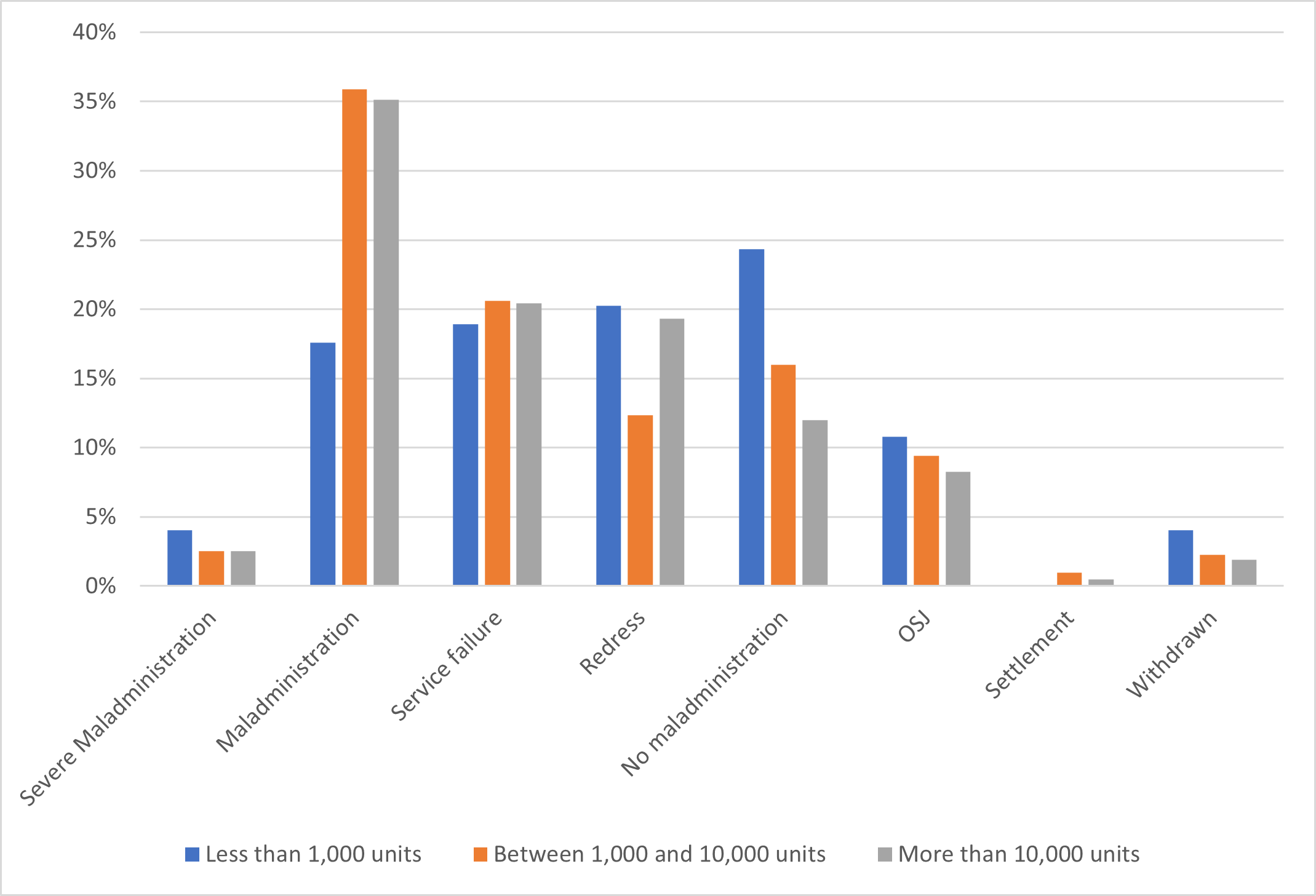
Size of landlordSevere Maladministration: Less than 1,000 units 4%, Between 1,000 and 10,000 units 3%, More than 10,000 units 3%. Maladministration: Less than 1,000 units 18%, Between 1,000 and 10,000 units 36%, More than 10,000 units 35%. Service failure: Less than 1,000 units 19%, Between 1,000 and 10,000 units 21%, More than 10,000 units 20%. Redress: Less than 1,000 units 20%, Between 1,000 and 10,000 units 12%, More than 10,000 units 19%. No maladministration: Less than 1,000 units 24%, Between 1,000 and 10,000 units 16%, More than 10,000 units 12%. OSJ: Less than 1,000 units 11%, Between 1,000 and 10,000 units 9%, More than 10,000 units 8%. Settlement: Less than 1,000 units 0%, Between 1,000 and 10,000 units 1%, More than 10,000 units 0%. Withdrawn: Less than 1,000 units 4%, Between 1,000 and 10,000 units 2%, More than 10,000 units 2%.

Orders and recommendations

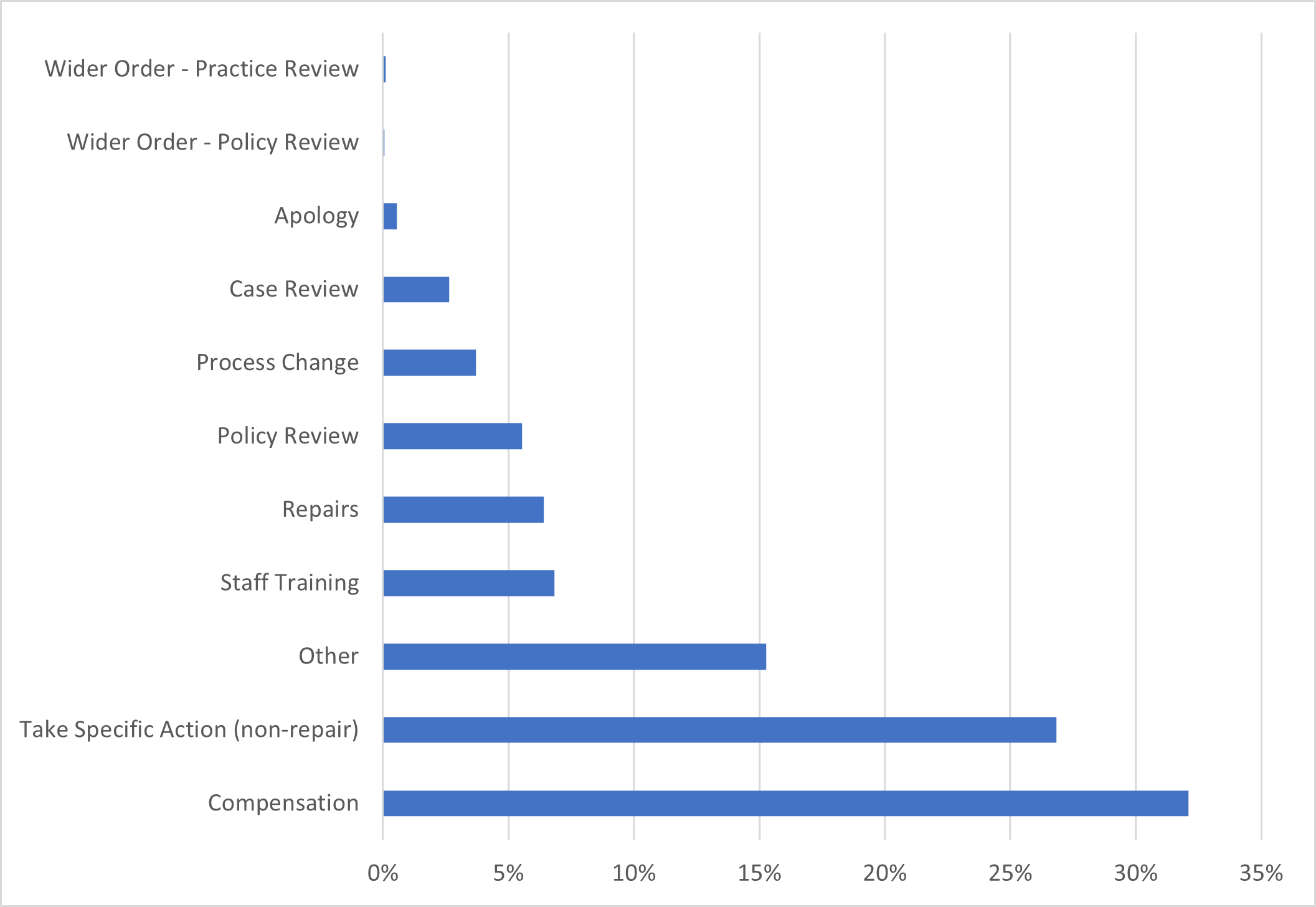
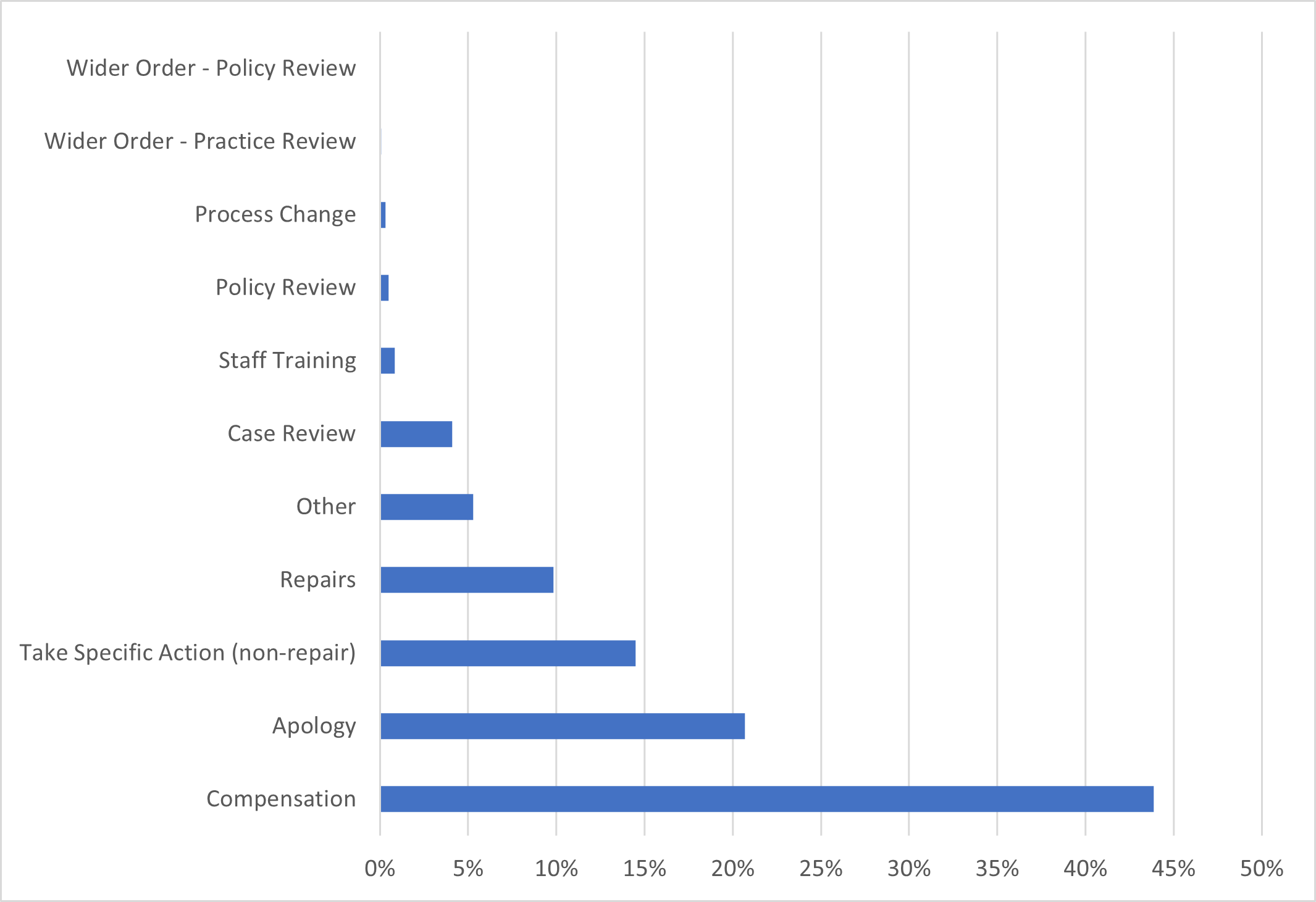
The orders given to landlords graph shows that in 44% of cases, we ordered landlords to pay residents compensation. And the recommendations given to landlord's graph shows that in 27% of cases, we recommended that the landlord take non-specific action (usually something that is outside a repair).

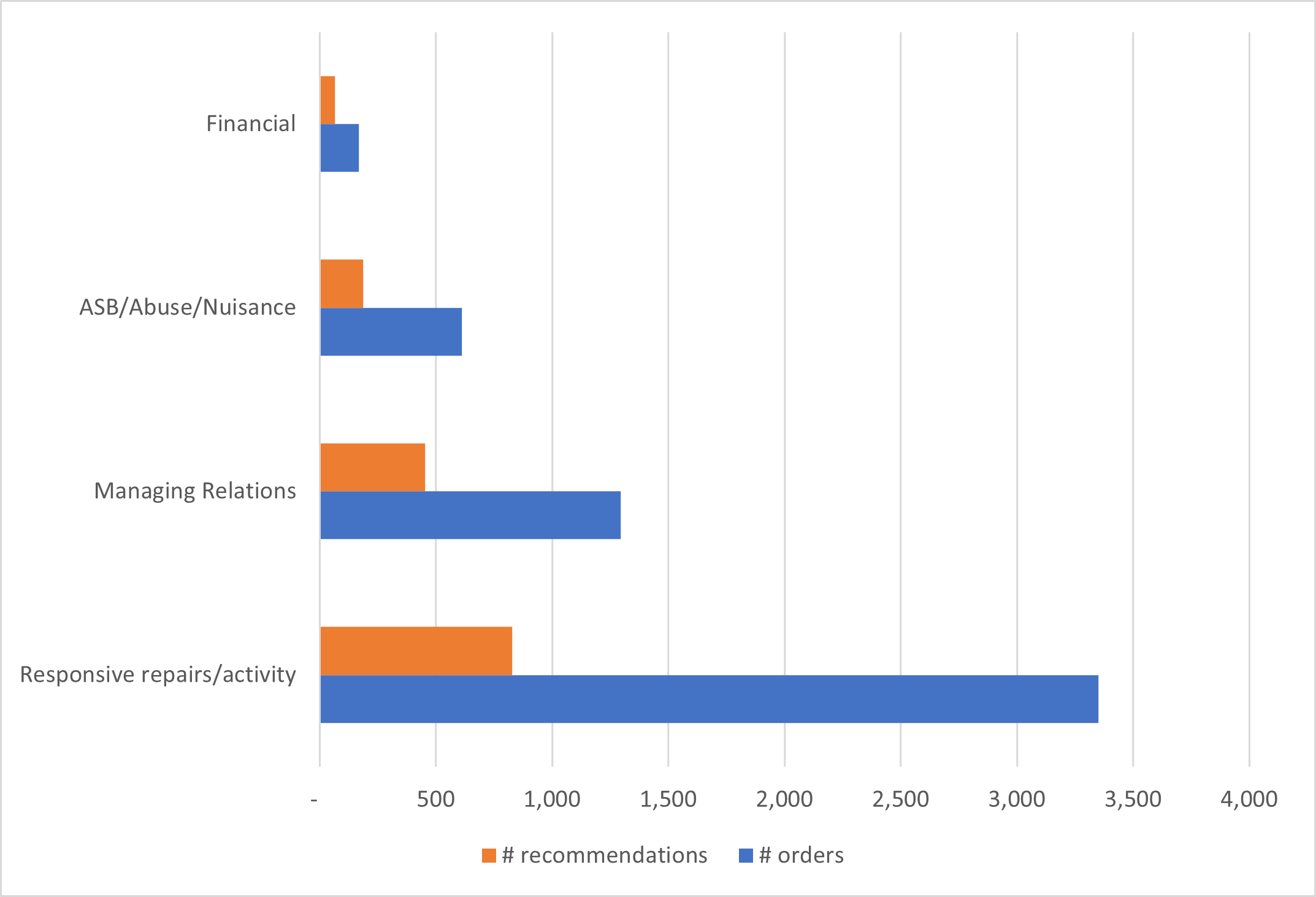
The final graph shows how many orders and recommendations we’ve made based on the top 4 complaint categories.

Orders given to landlordsCompensation 44%, Apology 21%, Take Specific Action (non-repair) 15%, Repairs 10%, Other 5%, Case Review 4%, Staff Training 1%, Policy Review 1%, Process Change 0%, Wider Order - Practice Review 0%, Wider Order - Policy Review 0%.
Recommendations given to landlordsCompensation 32%, Take Specific Action (non-repair) 27%, Other 15%, Staff Training 7%, Repairs 6%, Policy Review 6%, Process Change 4%, Case Review 3%, Apology 1%, Wider Order - Policy Review 0%, Wider Order - Practice Review 0%.

Orders and recommendations made against top 4 complaintsResponsive repairs/activity: number of orders 3,349, number of recommendations 827. Managing Relations: number of orders 1,296, number of recommendations 452. ASB/Abuse/Nuisance: number of orders 612, number of recommendations 186. Financial: number of orders 168, number of recommendations 66.
* All data is provisional and subject to confirmation in the final end-year figures to be published in the annual report.

Please note that this data may be subject to change. The verified data that we publish on an annual basis in our Annual Complaints Review can be found online.